
Special Thanks
This project was made possible in part from the through the support, and expertise of the faculty members who helped us explore and gain a deeper insight into the historical and architectural legacy of Colorado State University. Our gratitude towards the individuals whose knowledge and assistance greatly contributed to the success of this venture.
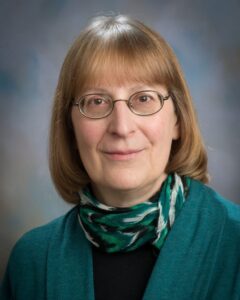
Linda Meyer
Historian & Author, CSU Libraries
Linda Meyer is a historian and longtime contributor to Colorado State University’s archival research. She is the author of CSU: A Sense of Place, a leading work documenting the university’s architectural and cultural history. Her expertise helps students and visitors understand the depth of CSU’s historic identity.
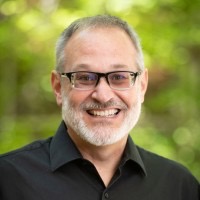
Mark Shelstad
Archivist, CSU Special Collections
Mark Shelstad is an archivist at Colorado State University who works closely with the university’s Special Collections and digital preservation efforts. He helps care for CSU’s historic records and makes them accessible to students and researchers. His work preserves the stories and documents that shaped CSU’s history.
Contemporary Architectural Highlights
Interview Highlights – Linda Meyer
Listen to the Full Interview!!!
“Women were on the ground floor and men were upstairs and so if one of the men wanted to speak to one of the female students they would attach a note to a rock and lower it down on a string to one of the windows and tap the rock on the window, and the female students would pull the note in and find who it was addressed to so they could write a note back.”
“George Glover was credited with founding the veterinary program at Colorado, A&M, which is the name of CSU before I became University. And so this building was named in his honor.”
“So the very first building on campus was something they called the claim shanty, which was a little brick building that was put up in 1874 to establish our claim to the Land Grant College.”
“Glover and many other buildings were constructed during the 20 year presidency of William E. Morgan. The most being built right after World War Two when there was a boom of soldiers returning home from the war who wanted to use their G.I bill to go to school.4 to establish our claim to the Land Grant College.”
“Glover and many other buildings were constructed during the 20 year presidency of William E. Morgan. The most being built right after World War Two when there was a boom of soldiers returning home from the war who wanted to use their G.I bill to go to school.”
“Old Main was quite the fire trap, and had been sighted for demolition a few times. While the historical preservation movement of the 1970s was gaining traction in Fort Collins, Old Main unfortunately burned down before it could be renovated.”
“We used to have a train station that stopped directly in campus, where people used to be able to get off and walk to campus. It was right along Mason just north of where the field house is.”
“A pretty cool old building I wish was still here was the agricultural hall along college avenue. It used to have some stone carvings in the shape of a ram’s head, an ear of corn and a pumpkin. And it was pretty fun looking but the buildings along college became the victims of the desire to make the campus look more modern in the early 1960s.”
“The transformation from Colorado A&M to Colorado State University happened in 1957. This corresponded with the construction of the Clark and Eddy Building which were built to meet the requirements of a true university and offer more liberal arts such as english, foreign language, and other humanities classes.”