
Morgan Library
The Heart of CSU Leadership Since 1924
Quick Facts
Year Built
1880
CSU’s library begins as a small reading room in Old Main; relocates and grows over early decades before the construction of the Morgan Library building.
Original Purpose
Early Beginnings before 1965
It was the first building constructed specifically to be the university library on the CSU campus. It was commissioned to provide large reading rooms and a fireproof room for books.
Current Morgan Library
1965 – Present
The opening of the Morgan Library in 1965 was a major shift, as it was four times the size of the Oval building and allowed the university to finally combine its main collection and four branch libraries into one central location.
Location
Center Ave of CSU
501 University Ave, Fort Collins, CO 8052
Architect
Architect
James M. Hunter and Associates
Builder
Builder
the Hensel Phelps Construction Company
Historical Overview
The history of Colorado State University’s library is one of constant growth, marked by the need to secure larger, more dedicated space to serve a rapidly expanding institution. The library began modestly in 1880 as a small reading room within the first permanent campus building, Old Main. For its first few decades, the collection was continually moved as the university grew, relocating to the main floor of the Commercial Building (now Laurel Hall) in 1904. By the 1920s, the inadequate and scattered facilities led to the construction of a permanent home: the Library on the Oval. Opened in 1927, this two-story structure was the first building constructed specifically to house the university library, providing large reading rooms and a secure environment for the collection.
The post-World War II enrollment boom and the institution’s transition to Colorado State University in 1957 quickly overwhelmed the 1927 facility. The critical need for a modern, centralized building was recognized and championed by President William E. Morgan (1949–1969). The new structure, designed by James M. Hunter, was a massive undertaking, and when it opened in 1965 and was formally dedicated as the William E. Morgan Library, it was a major symbol of CSU’s transformation. The new library was four times the size of the previous facility and finally allowed the university to consolidate its main collection and four branch libraries into one central location.
Since its completion, the Morgan Library’s history has been defined by adaptation and resilience. A significant $22.6 million renovation and expansion was completed in 1998, dramatically increasing space and modernizing the interior. However, during this construction, the library suffered one of the largest water-related library disasters in U.S. history during the 1997 Spring Creek Flood, requiring years of recovery and restoration for hundreds of thousands of volumes. Today, the William E. Morgan Library remains the heart of academic life at CSU, continually evolving through additions like the Study Cube (2012) to serve the research and collaboration needs of a modern university.
Building Timeline
Architecture Features
Utilitarian Design
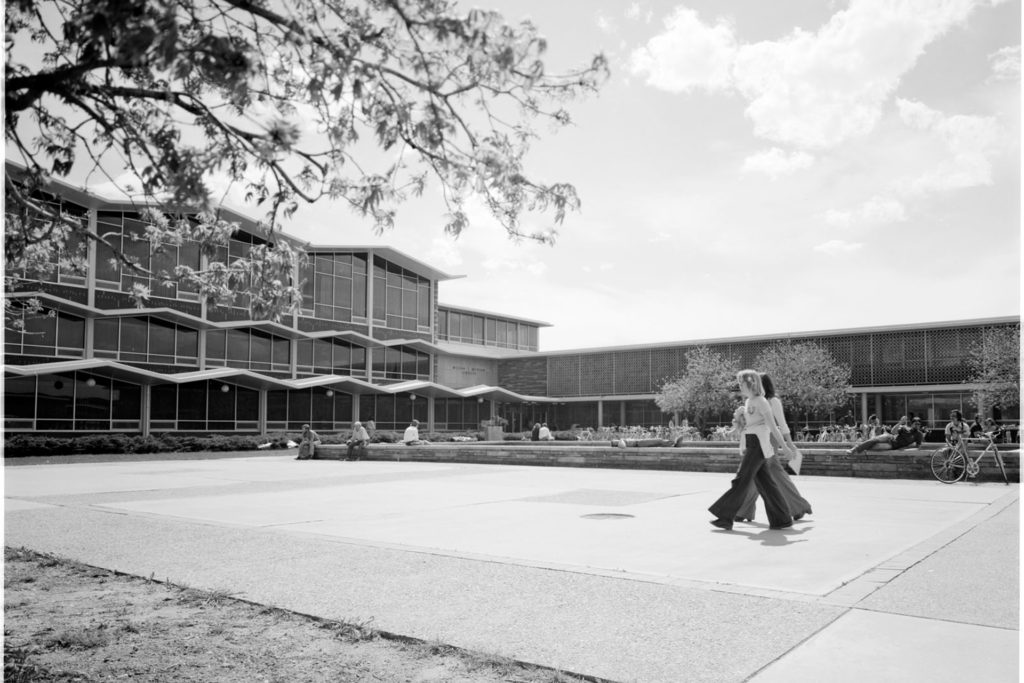
The original Morgan Library building, designed by James M. Hunter and opened in 1965, was a large, utilitarian structure intended to consolidate the university’s collections and serve a rapidly growing student body.

Fully Glazed Curtain Wall
It is a two-story addition enclosed almost entirely by glass, featuring a modern curtain wall system that contrasts sharply with the solid, concrete-based construction of the original building.
North Entrance Focus
The Cube frames and highlights the main entrance, creating a visually compelling and transparent entryway.
Notable Features:
The Study Cube
A striking, two-story, fully glazed (glass-walled) addition located at the north entrance.
Central Atrium
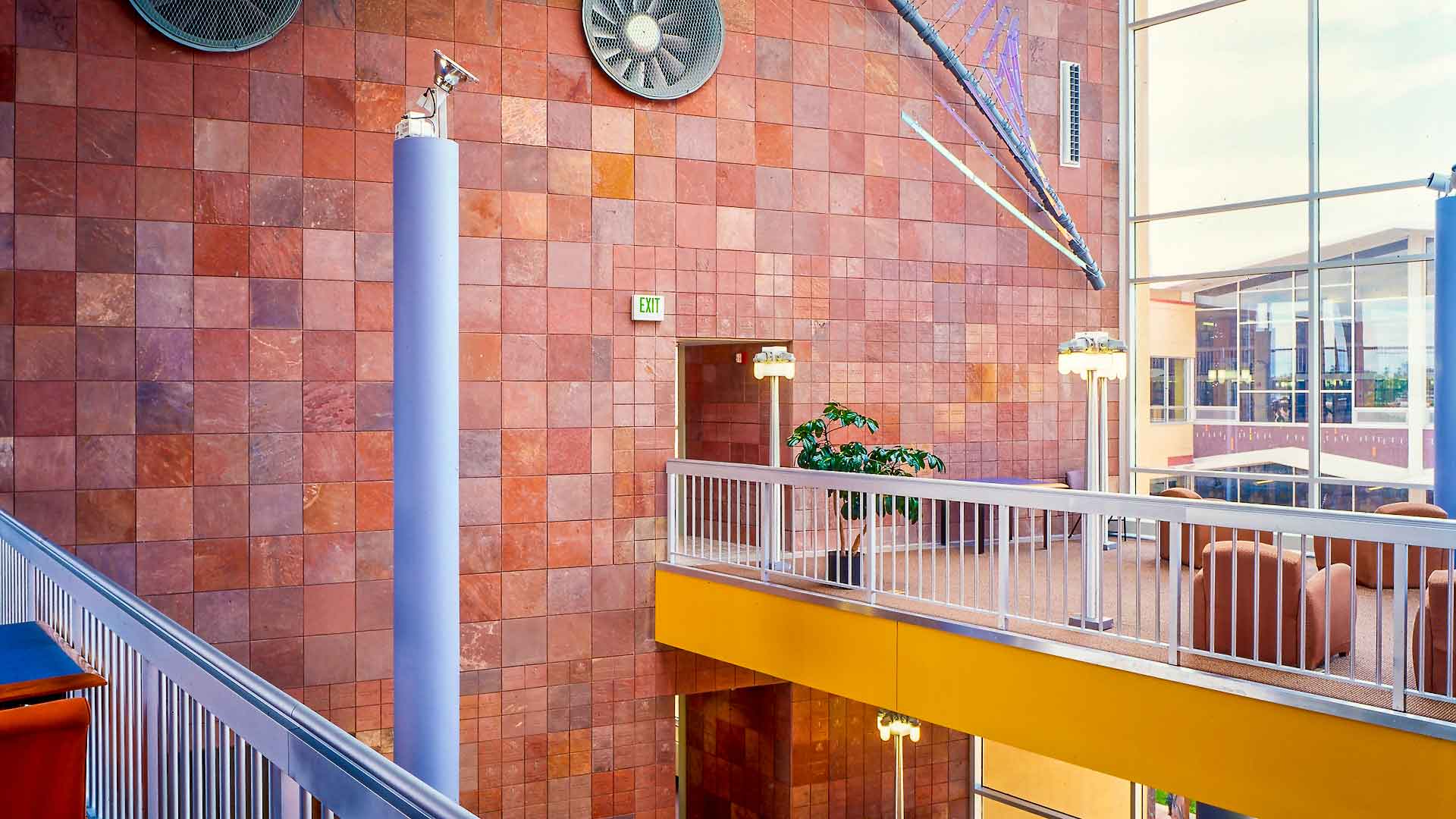
The renovation introduced large, multi-story open spaces and atriums to improve natural light penetration and aid in wayfinding across the massive floor plate.
Electro-Chromatic Glazing
The glass on the western exposure is specialized (electro-chromatic), allowing it to tint automatically to reduce solar heat gain and glare—a feature of modern, sustainable architecture.

Then and Now
Historical View

The William E. Morgan Library, which opened in 1965, was built to centralize and expand upon the collections previously scattered across the Colorado State University (CSU) campus. During its massive expansion in the 1990s, the library sustained extensive damage from the 1997 Spring Creek Flood, impacting nearly half a million volumes. Today, the library continues to serve as CSU’s primary academic resource, featuring modern, notable spaces like the glass Study Cube addition.
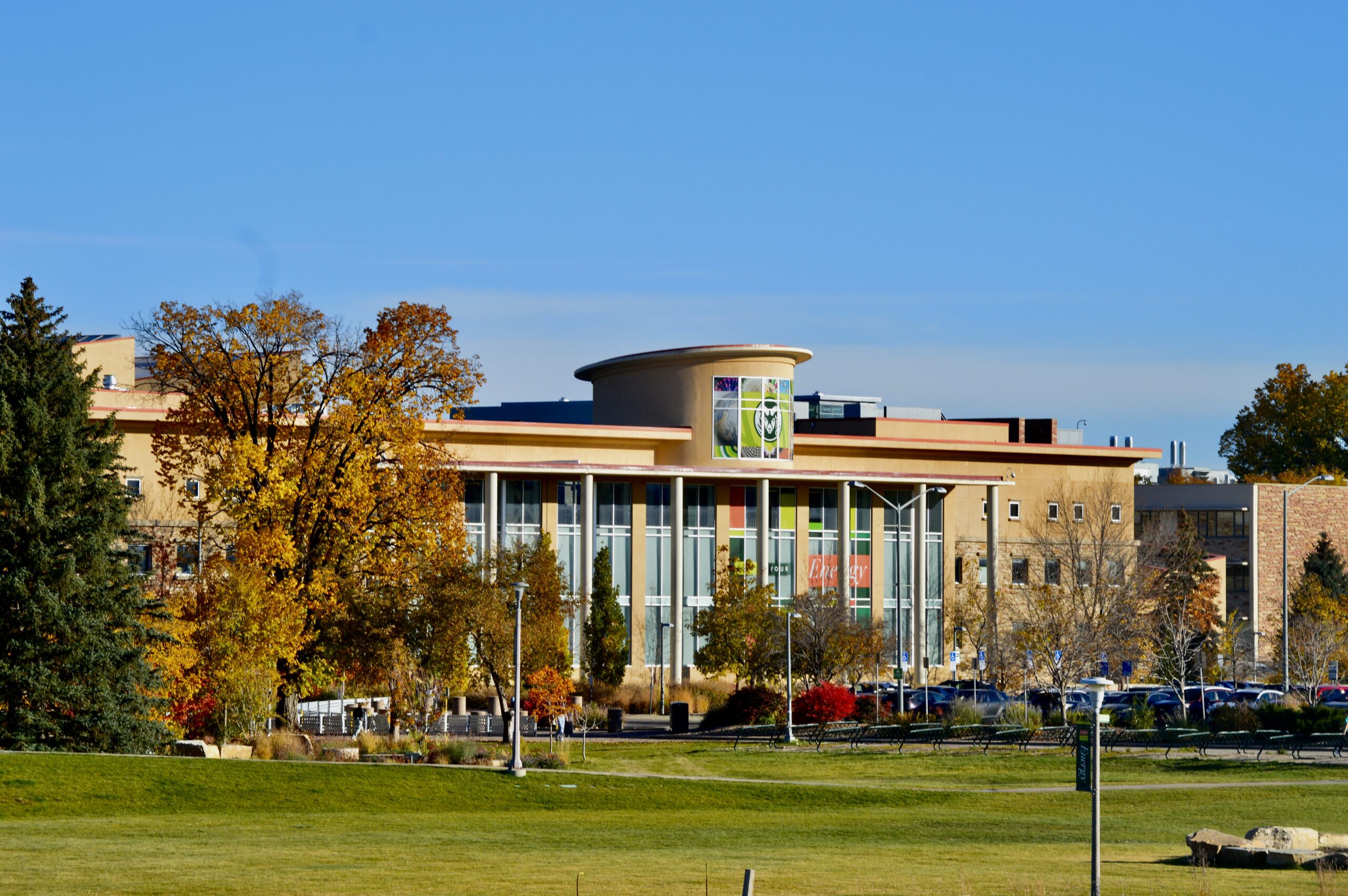
Modern View

Today, the William E. Morgan Library serves as the vibrant and essential central learning hub for Colorado State University, far exceeding its original function as just a repository for books. It focuses on supporting student success, digital resources, and collaborative learning.
Historical Significance
The historical significance of the William E. Morgan Library is rooted in its role as a catalyst for modern academic life at CSU, symbolizing the university’s transition into a major research institution and its remarkable resilience in the face of disaster.
The library is a permanent tribute to its namesake, President William E. Morgan (1949–1969), who steered the university through its major post-World War II expansion and the critical change from Colorado A&M to Colorado State University. The 1965 structure itself was designed to be a unified, centralized library facility, a vast improvement that was four times the size of the previous building and allowed CSU to consolidate scattered collections, an essential step in supporting larger enrollment and advanced research.
The library’s history is deeply intertwined with a defining moment of campus resilience: the 1997 Spring Creek Flood. The subsequent damage to nearly 500,000 volumes and the successful recovery effort earned the Morgan Library an international reputation for disaster recovery, cementing its status as a symbol of the university’s commitment to preserving its academic resources. Ultimately, through continuous modernization, including the 1998 expansion and the 2012 addition of the Study Cube, the Morgan Library represents the continuous institutional investment in contemporary student support and the future of collaborative, technology-rich learning at the heart of the CSU campus.