
George H. Glover Building
A place of science and new possibilities
Information and Quick Facts
Year built
1948
New Purpose 1979 – 2025
New Departments
shortly after 1979 the Engineering Agricultural Department as well as the Telecommunication department called glover home. This was where professor offices where as well as classes and where the telecommunication team called home and held supplies for jobs around campus.
Original Purpose
Vetinarian Teaching Hopsital
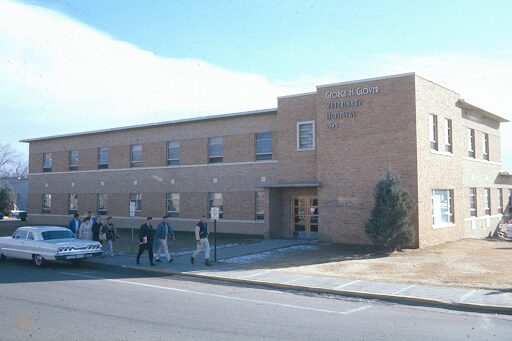
Glover was the Vetinarian hospital and teaching facility from 1950-1979, This helped kick start CSU’s impeccable vet program and helped create new frontiers in vet Medicine.
Upcoming Developments
Rebuilding / Improvement
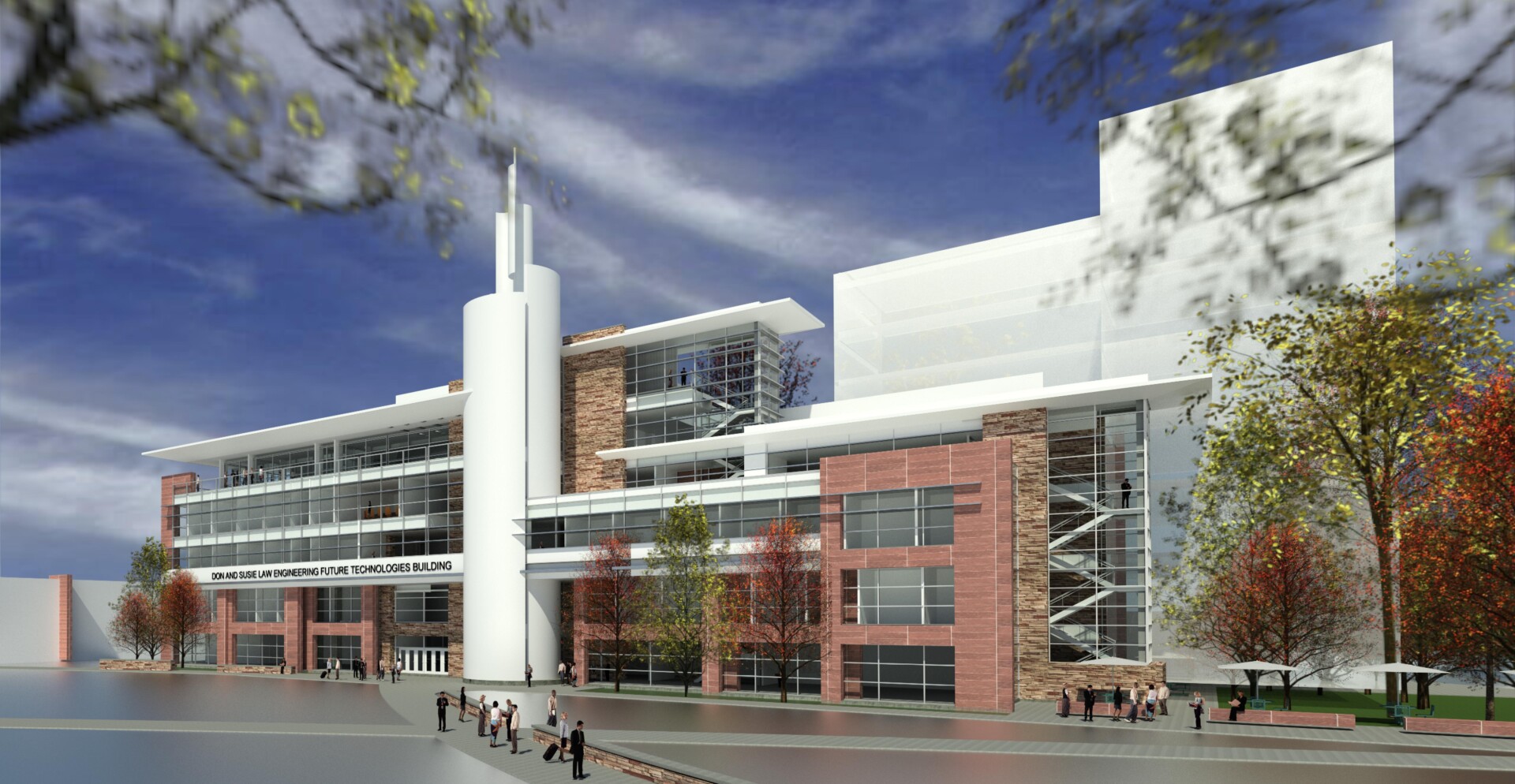
the Glover building today is being demolished in order to make way for a brand new Don and Susie Law Engineering Future Technologies Building. This building will be the main hub for both engineering and computer science students to get hands on experience with AI and future upcoming technologies. Renders of the new building can be seen above!
Historical Overview
The Glover Building at Colorado State University (CSU) is a historically significant structure, named in honor of Dr. George H. Glover, one of the college’s first three graduates in 1884 and the founder of its esteemed veterinary program.
Constructed around 1948, the building’s original function was to serve as a state-of-the-art veterinary hospital and teaching facility. After the veterinary program moved to newer facilities, the Glover Building transitioned to house various other academic departments, including engineering classrooms and labs for the Walter Scott, Jr. College of Engineering.
While it no longer serves its original purpose, the building remains a physical connection to CSU’s roots in agricultural and veterinary science. It is currently slated for demolition and will be replaced by the Don and Susie Law Engineering Future Technologies Building, marking a continued evolution of the campus toward modern, technology-focused research.
Building Timeline
Architecture Features
Post-World War II Functionalism
The Glover Building, conceived in the Post-World War II Functionalist style and constructed in 1948, was designed to meet the immediate, practical needs of the growing Veterinary Hospital. This architectural approach emphasizes utilitarian simplicity and unadorned concrete and brick construction, reflecting the pragmatic priorities of institutional building in the post-war era. Its form is defined by a low-profile, horizontal massing and a flat roofline, which eschews the traditional ornamentation found in CSU’s older campus core. The window placements and simple, rectilinear shape reinforce a focus on efficiency and function, making it a clear example of the campus’s mid-century transition toward Modernist principles.


Plaza Placement
It is strategically situated immediately east of the Lory Student Center (LSC), which is the main hub for student activities, dining, and campus services. This made the building’s site highly valuable and visible, placing it directly in a high-traffic intersection of campus life and academic flow.
Symbol of Transition
In its later life, the building became a major host for Engineering and Telecommunications programs. Its transition from veterinary medicine to engineering classrooms and labs makes it a physical symbol of the university’s shifting academic priorities over the second half of the 20th century.
Notable Features:
Utilitarian Aesthetic
The building is a prime example of Post-WWII Functionalism. Its notable feature is its lack of ornamentation, contrasting sharply with the Classical Revival and Italian Renaissance styles of older buildings on campus (like those around The Oval).
The 1983 Telecom Additioncal Design
A specific notable feature is the 1983 addition that was built to house the University Telecommunications Office. This section had to be specially managed during the initial decommissioning because it contained essential communications infrastructure that needed to be protected until it could be relocated.
Then and Now
Historical View

The Administration Building shortly after construction in 1924, showing its prominent position at the south end of the newly designed Oval. The building replaced Old Main as the administrative heart of Colorado Agricultural College (as CSU was then known).
Modern View

The physical Glover Building has been recently decommissioned (late 2025) and is currently closed, with demolition scheduled to begin in January 2026. This action clears the site to make way for the Don and Susie Law Engineering Future Technologies Building , a new 165,000-square-foot facility. This state-of-the-art building will serve as an interdisciplinary hub focused on engineering, computer science, and artificial intelligence, featuring modern labs and collaborative spaces. The construction is part of a major modernization effort by CSU, with the new facility currently anticipated to be completed and open in Summer 2028.
Historical Significance
The historical significance of the Glover Building is deeply rooted in both the legacy of its namesake and its role in the physical development of the CSU campus. The building serves as a permanent tribute to Dr. George H. Glover, a pioneer graduate from 1884 who was instrumental in founding and establishing the university’s premier veterinary program.
The 1948 structure itself was originally constructed as the program’s dedicated, modern Veterinary Hospital and teaching facility, symbolizing the university’s post-WWII growth and its commitment to animal health. Over time, the building’s function shifted dramatically, moving from veterinary clinical space to housing Engineering and Telecommunications departments, which physically reflects CSU’s transition from its agricultural roots to a diversified technological institution.
Ultimately, the building’s decommissioning and planned demolition is historically significant as it acts as the catalyst for the Don and Susie Law Engineering Future Technologies Building, representing a major institutional investment in the future of digital engineering and Artificial Intelligence (AI) at a crucial central campus location.