
Administration (Old Main)
The Heart of CSU Leadership Since 1924
Quick Facts
Year Built
1879 / 1924
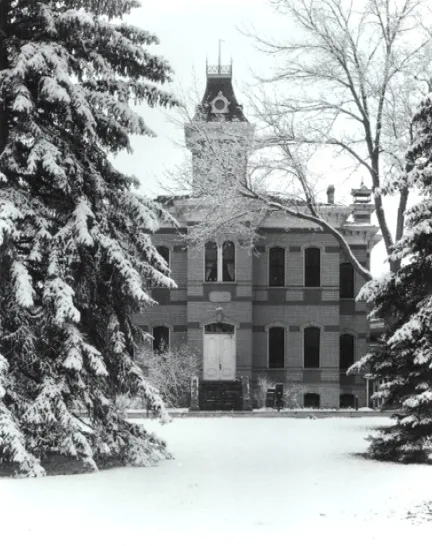
The Old main building finished construction in 1879. Then it’s reconstruction in 1924 after the infamous u0022Old Main Fireu0022 incident.
Original Purpose
First Building and Administration
Old Main was the central hub of the campus, housing classrooms, professors’ offices, and even the president’s family quarters in the basement. As the first permanent building on campus, completed in 1879, it served as the sole location for academic and administrative functions for many years.
New Purpose
Current Administration Building
Today the Administration building (Old main) serves as the central hub for the university’s top-level governance and administrative operations.
Location
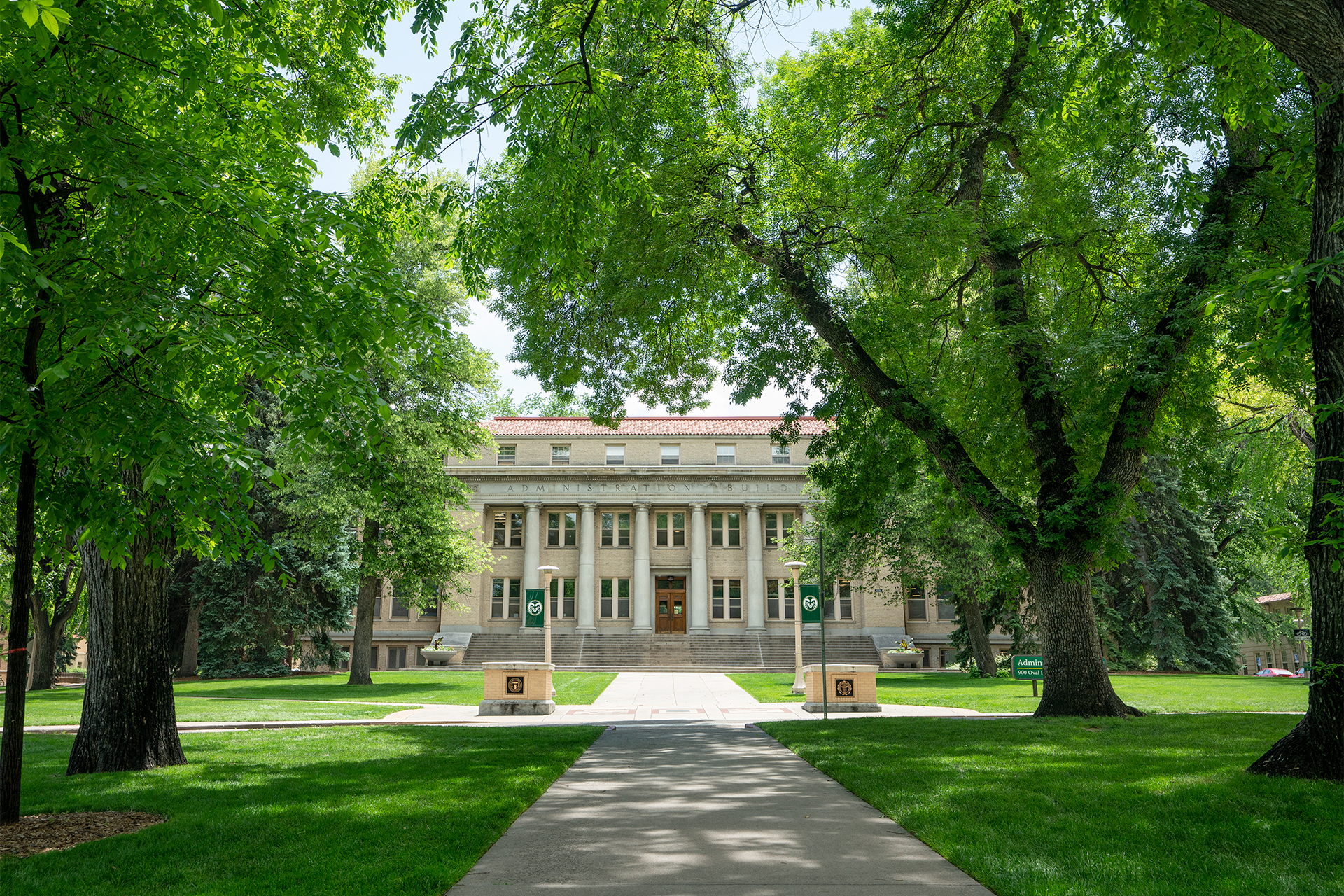
The Oval
South end of the Oval
Architect
Architect
Eugene G. Groves
Builder
Builder
C.E. Walker Construction Company
Historical Overview
The Administration Building stands as one of the most visually striking and historically significant structures on Colorado State University’s campus. Designed by Eugene G. Groves in the Classical Revival style, the building was constructed in 1924 to replace the cramped and aging facilities at Old Main, which had served as the administrative center since 1879.
The building’s construction was delayed by the devastating fire of December 22, 1921, which destroyed the Chemistry Building and forced the university to prioritize its replacement. Originally scheduled for construction during the 1922-23 budget year, work on the Administration Building finally began in August 1923, with move-in taking place in July and August 1924.
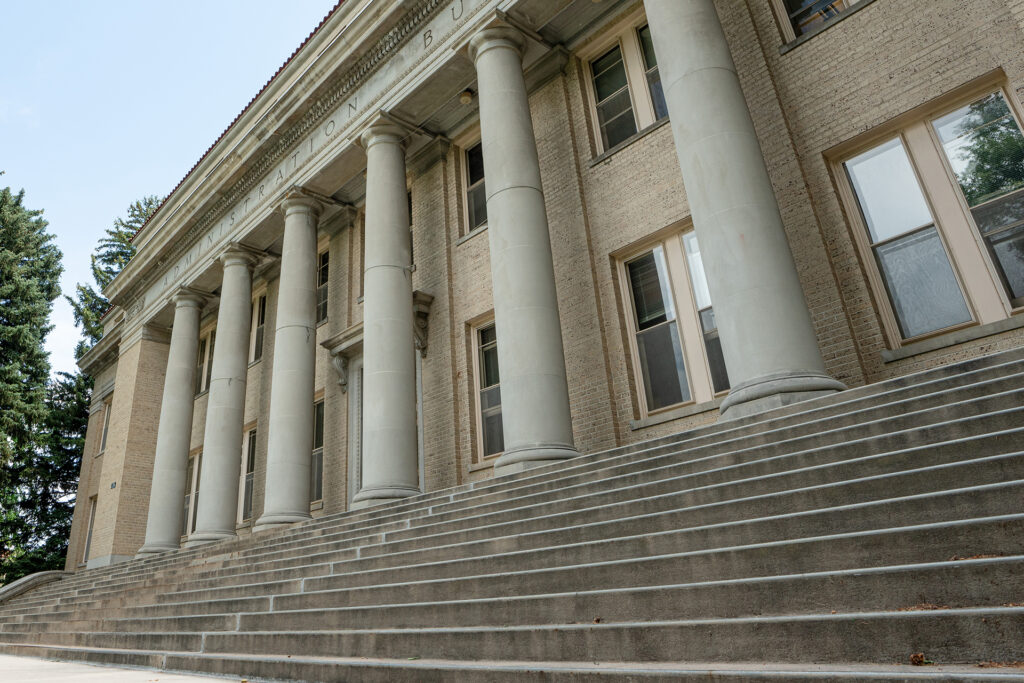
The building’s imposing Classical Doric columns on the south end of the Oval give it a commanding presence as visitors approach to meet with the top administrators of the Colorado State University System. It is the oldest building on campus, except for the nearby District Heating and Cooling Plant, that is still used for its original purpose.
Building Timeline
Architecture Features
Classical Revival Design
Eugene G. Groves, one of CSU’s most prolific architects who designed 13 buildings on campus, conceived the Administration Building in the Classical Revival style. This architectural approach reflects the dignity and permanence appropriate for the university’s administrative center.

Central Location
Strategically positioned to face the Oval, serving as a focal point for campus gatherings and ceremonies.
Accessibility Features
The 1981 addition of a stair tower and elevator demonstrates the university’s commitment to making historic buildings accessible to all.
Notable Features:
Doric Columns
The imposing classical Doric columns on the front facade create a grand entrance on the south end of the Oval.
Symmetrical Design
The building features balanced proportions typical of Classical Revival architecture.
Buff Brick Construction
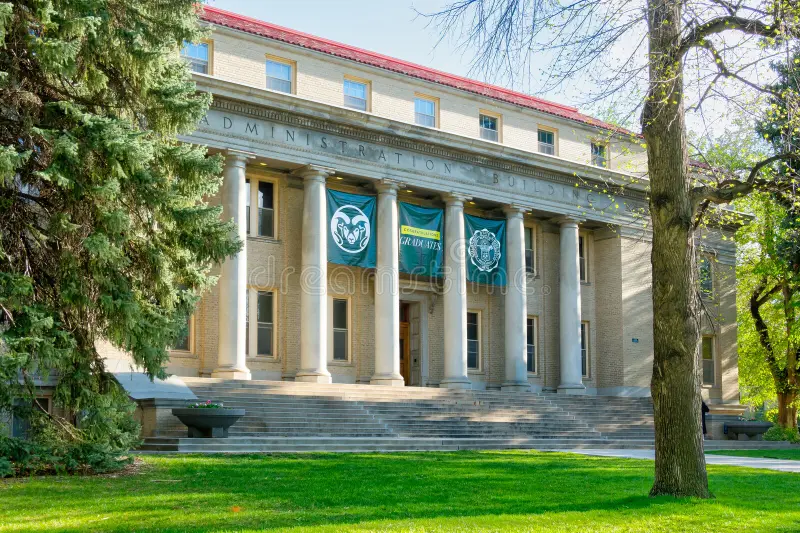
Built with buff-colored brick and accented with gray sandstone and terracotta details. Built with buff-colored brick and accented with gray sandstone and terracotta details.
Then and Now
Historical View
The Administration Building shortly after construction in 1924, showing its prominent position at the south end of the newly designed Oval. The building replaced Old Main as the administrative heart of Colorado Agricultural College (as CSU was then known).
Modern View
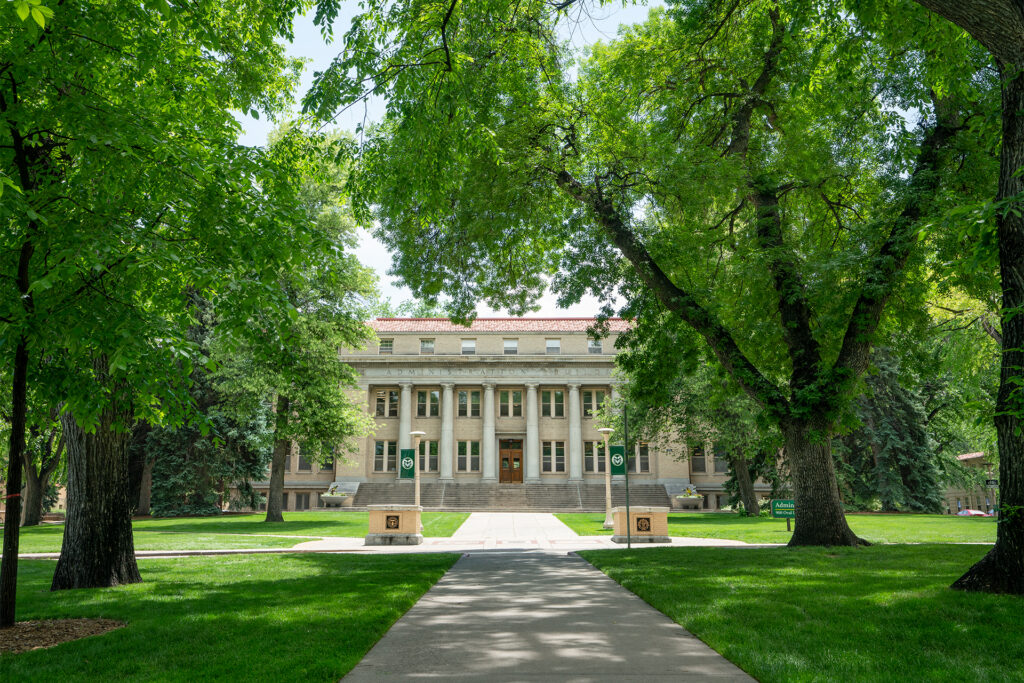
Today, the Administration Building continues to serve its original purpose, housing the Office of the President and top university administrators. The 1981 accessibility additions have been carefully integrated while preserving the building’s classical character.
Historical Significance
The Administration Building represents more than a century of university leadership and growth. Charles A. Lory, the first president to serve from this building, led the institution for nearly 40 years and oversaw its transformation from Colorado Agricultural College into a comprehensive university with multiple departments and disciplines.
As one of the few buildings on campus that has maintained its original function continuously since construction, the Administration Building serves as a symbol of institutional stability and tradition. Its Classical Revival architecture reflects the values of education, permanence, and democratic ideals that were central to land-grant universities in the early 20th century.
The building’s position facing the Oval—designed in 1909 and lined with 65 American Elm trees—creates an iconic campus view that has been photographed countless times and remains central to CSU’s identity.